


As you may have noticed when studying your perfume label, alcohol is often the main ingredient in your favorite formula. But what is it used for and and where does it really come from? Are there compositions that do not contain alcohol? These are some of the questions that we will answer in this article without taboo to really understand the links between alcohol and perfume.
Alcohol, zoom on the main ingredient of your perfume
What are alcoholic perfumes?
In perfumery there are several types of compositions, including alcoholic perfumes. In this kind of fragrance, we find on the one hand the odorant concentrate, that is to say the formula created from natural and synthetic scented ingredients that will reveal the olfactory pyramid of the juice, as well as the alcohol that acts as a support to the perfuming substance. This ingredient is an ethyl alcohol (also called ethanol) because it is a neutral and odorless material, which will therefore not alter the scents revealed by the odorant concentrate. An alcoholic fragrance is between 70% and 92% alcohol, depending on the type of fragrance chosen (eau de Cologne, eau de toilette, eau de parfum, perfume…).
Often, its presence in the list of ingredients worries, yet alcohol is a very common material in the world of cosmetics for its properties. Indeed, it is miscible in water, stable, colorless and volatile. The formula of alcoholic perfumes is the most widespread in our industry, especially in the West. It is also the most recent since its origin goes back to the XIV century, after the use of oil or fat based supports.
Denatured alcohol, what is that?
The alcohol used in the compositions does not really look like brandy or vodka! This one is most of the time denatured, meaning it is made unfit for consumption. Yes, but why and how? In Europe there is a tax, the excise duty, which is levied on the consumption of alcohol and alcoholic beverages. This tax is paid indirectly by the final consumer since it is charged to the selling price of the product containing alcohol. The denaturing of ethanol allows manufacturers to avoid this excise tax, but also to avoid the illegal detour of products as alcoholic beverages.
Alcohol is denatured in this way: various chemical compounds are added to make it “undrinkable”. These will change its taste (generally making it very bitter), its color and even its smell. Drinking your perfume is therefore strongly discouraged! The denatured alcohol will however keep its properties and will always be an excellent support for the fragrance concentrate. Thus, you will sometimes find the term “ALCOHOL DENAT” or “SD ALCOHOL” (Specially Denatured Alcohol) on the labels of your products. It is also possible to denature the alcohol by adding a denaturing ingredient directly into the composition of the product. We find the mention “ALCOHOL” in the INCI list, but it is denatured.
Where does the alcohol in your perfumes come from?
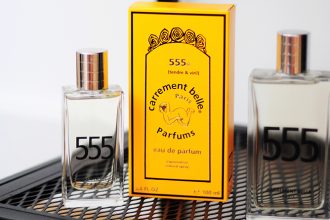
There are various ways to produce ethyl alcohol, although its final properties remain the same. The first way is to create synthetic ethanol, through synthesis by making it directly in the laboratory. It is also possible to obtain bioethanol, also called agricultural ethanol. Unlike synthetic ethanol, its origin is vegetable. That’s why we generally find this form of alcohol in the so-called natural perfumes. To make it, sugars or starch from various plant sources such as fruits, sugar cane or cereals are fermented. After fermentation, the ethanol obtained is distilled to be purified before being dehydrated to eliminate all its water. It is then denatured. At Carrément Belle, we use a natural alcohol, of vegetable origin created from beet.
Why is there alcohol in perfume?
There are several reasons for the presence of ethyl alcohol in perfume. The first thing is that alcohol will be used as a base to distill the fragrance concentrate. The perfumed substance will thus be diluted in this ethanol, which will not be possible in water for example. In fact, the alcohol acts as a solvent for the aromatic compounds of the other materials in the formula. In this way, the fragrance concentrate will remain on the skin longer without damaging it.
Thanks to its volatility, ethanol will evaporate very quickly to hand over to the fragrant materials that will settle on the skin and diffuse their notes over the hours. It will then reveal a real impression of freshness during the vaporization to finally fade away after a few moments. Another advantage of alcohol, and not the least, is that it allows an excellent conservation of the perfume in time.
From eau de Cologne to perfume extract: it’s all about concentration
While alcohol acts as the carrier, it is the share of odorant concentrate that sets the great perfume families apart. The rule is simple: the more concentrate a juice contains (and therefore the less alcohol), the more intense it is and the longer it lingers on the skin.
The lightest: plenty of alcohol, little concentrate (around 2 to 5%). Fresh and lively, it is happily reapplied through the day.
More concentrate (around 5 to 10%) for a more assertive sillage, while keeping its freshness.
Richer still (around 10 to 20%), with generous presence and hold.
The highest concentration: the most concentrate, the least alcohol. The most intense and enveloping form of a fragrance.
This is the direction our collection is moving in: our fragrances as perfume extracts offer their most concentrated version. To understand it all, we have put together a dedicated guide to the perfume extract, and a full comparison of the different concentrations.
Concentration, alcohol and hold: what happens on the skin
Once sprayed, alcohol evaporates within moments (that fresh first burst), leaving the odorant concentrate to settle on the skin. Naturally, the richer that concentrate, the longer the notes linger: a perfume extract, highly concentrated, can last half a day or more, depending on the formula and your skin. Our tips to make a perfume last longer apply to every concentration.
- Spray on clean, moisturised skin, which holds the notes better.
- Aim for pulse points (wrists, neck), where warmth diffuses the fragrance.
- Choose a higher concentration when you are after hold.
- Rubbing your wrists together: it breaks the finest notes.
- Spraying on dry skin, which lets the perfume evaporate faster.
- Storing your bottle in direct light or near a heat source.
Does alcohol-free perfume exist?
Other types of scented compositions
If alcoholic perfumes are the most used today, there are other ways to make fragrances without using alcohol. There are oily fragrances that use oil as a support for the fragrance concentrate. Sweet almond, sesame or wheat germ oil can be used to make this type of composition. However, some odorant compounds are not miscible with oil. It is thus necessary to find soluble substances in this base a little more capricious. Other fragrances can have as a support wax or butters of vegetable or mineral origin. These are greasy perfumes, sometimes called “concretes”. In solid form, they are applied by small touches. Although very rare now, there were perfumes in powder form, whose base was talc. They were very widespread during the Renaissance, to perfume wigs and the face.
The alcohol-free perfume, an ancestral creation
If the alcohol-free perfume is democratized for marketing reasons, it is a form of composition that has existed since the dawn of time. Its origins go back to Antiquity, with the appearance of attar, a non-alcoholic perfume from India and the Middle East. It is made by distilling plants (herbs, ground spices, flowers…) and then adding the essences obtained to a basic essential oil, usually sandalwood, although nowadays it is more often liquid paraffin. Attar is rare in the West. It is widely used in the Middle East, especially by Muslims because it does not contain alcohol, a substance prohibited by Islam.
You now know a little more about the links between perfume and alcohol!
Your questions about alcohol in perfume
Do all perfumes contain alcohol?
No. Alcoholic perfumes are the most common, but there are also oil-based perfumes, solid perfumes (wax or vegetable butter) and, since Antiquity, attar, an alcohol-free perfume. Alcohol remains the most common carrier for its neutrality and volatility.
What does “alcohol denat” mean on the label?
It is denatured alcohol: compounds have been added to make it unfit for consumption, without affecting its qualities as a carrier. You may also see “SD alcohol” or simply “alcohol” in the INCI list.
Does alcohol-free perfume last as well?
It lasts differently: without the volatility of alcohol, diffusion is more discreet and closer to the skin, but it can be just as long-lasting depending on the formula and your skin. Oil-based carriers, for instance, release their notes more slowly.
What is the difference between an eau de parfum and a perfume extract?
It is a matter of concentration: a perfume extract contains more odorant concentrate (and less alcohol) than an eau de parfum. It is therefore more intense and longer-lasting. We explain it all in our guide to the perfume extract.
Does Carrément Belle perfume contain alcohol?
Yes, a natural alcohol of vegetable origin, made from beet. And to scent your home without alcohol, our fragrances also come as diffusers.

Samples of all our eaux de parfum, to explore the collection on your own skin, at your own pace, and find the fragrance that suits you. Your first set is even refunded as a voucher towards your next order.
The Discovery Set


10 Comments