


At Carrément Belle we have a soft spot for the materials that make people uncomfortable. Animal notes in perfumery are the oldest tools of the trade and the most misunderstood: they smell of fur, of skin, sometimes plainly of the barn, and yet they make a perfume deeper and more alive.
Musk, ambergris, civet, castoreum, hyraceum: here is where these five materials come from, what animalic notes really smell like, where they sit in a composition, and what synthetic chemistry changed for the animals that carried them.
What are animal notes in perfumery?
An animal note is an olfactory facet that originally came from animal secretions: musk, ambergris, civet, castoreum, hyraceum. It suggests fur, warm skin, leather, sometimes a faecal tone. Animal notes in perfume are not an olfactory family of their own: they add depth, warmth and staying power to the other notes.
Animalic notes are recognisable first by their density. Neat, most of these materials are hard to bear: civet smells of excrement, castoreum of burnt leather, musk of ammonia. Diluted down to a fraction of a percent they change face completely and turn warm, velvety, slightly unsettling. That reversal is exactly what makes them valuable in perfumery.
What do animalic notes smell like?
Of skin, more than of the animal. Perfumers talk about a skin effect, body warmth, warm fur. Depending on the material you also get tones of leather, honey, tobacco, sea salt. The clearest example of this double face is not animal at all: indole, a molecule naturally present in jasmine and orange blossom, smells of white flowers at low dose and plainly animalic once it concentrates.
What does animalic mean in perfume?
It is not a family but a facet, and it can turn up in several of the 7 olfactory families: in a chypre, in an amber, in a leather, sometimes in a floral. So an animalic perfume is not a category you can buy off a shelf. It is a composition in which someone chose to leave that facet audible.
What is musk in perfume?
Musk in perfume is a warm, powdery, slightly feral base note. It originally came from a gland of the male musk deer. That trade is now banned, so every musk used today is either synthetic or plant based. Musk works mainly as a fixative: it holds the lighter notes and extends the trail.
Where does musk come from?
From the musk deer, a small hoofed animal of the Himalayas and Central Asia. The male carries an abdominal pouch whose secretion, once dried, gives the raw material perfumers called musk grain. It reached Europe along the silk roads, and Marco Polo left a description that stuck. It should be said plainly what it cost: the pouch is taken from a dead animal, and no non lethal harvest ever existed at any real scale.
The finest balsam that is known.
Marco Polo, on musk
Is animal musk illegal?
In practice, yes. Musk deer species have been protected by the CITES convention since 1979, and international trade in natural musk is either banned or capped by very strict quotas. No serious perfume house works with animal musk today. We devoted two further articles to this material: the perfume of musk and the benefits of musk.
What is white musk?
White musks are the synthetic musks with a soft, clean, cottony smell, the ones that suggest dry linen rather than fur. They are now the most widely used family in the whole of perfumery, and they are far from interchangeable: some are powdery, others fruity or almost metallic. Our dictionary of synthetic molecules goes through the main ones.
The five animalic materials of perfumery
Five animals shaped the history of perfume, and none of them was chosen for its looks: it was the sheer power of their secretions that interested perfumers. All these materials first served to mark a territory, attract a mate or protect a coat. A gland from an animal gave perfume its staying power long before anyone knew how to make a fixative.


Musk, from the musk deer
- Origin
- Abdominal pouch of the male musk deer, Himalayas and Central Asia
- Smell
- Warm, powdery, slightly feral, rounded once diluted
- Role in a composition
- Base fixative, softens edges, extends the trail
- Status today
- International trade banned or tightly capped, the species having been listed by CITES since 1979
- In the glossary
- musk
- Replaced by
- Synthetic musks, both macrocyclic and polycyclic
Ambergris, from the sperm whale
- Origin
- Intestinal concretion of the sperm whale, formed around squid beaks and then expelled at sea
- Smell
- Marine, salty, animalic, with a hint of tobacco and driftwood
- Role in a composition
- Luminous fixative, lengthens and brightens an accord
- Status today
- The sperm whale has been protected by CITES since 1981. Collecting beached pieces is tolerated in some countries and banned in others, including the United States
- In the glossary
- ambergris
- Replaced by
- Ambroxan, a molecule obtained from clary sage
This is the only one of these materials the animal gives up by itself. The sperm whale expels the concretion, which can drift for years before washing ashore. Sea water, salt and sun transform it: fresh, it smells of the farmyard, weathered, it becomes one of the most sought after smells in perfumery. Ambergris should not be confused with two neighbours that share its name: amber, the fossil conifer resin, and the amber accord of amber perfumes, built on labdanum, vanilla and benzoin.
How do you recognise real ambergris?
A genuine piece is surprisingly light, waxy to the touch, grey to black, often veined with white, and it floats. It softens with the warmth of a hand and leaves a stubborn smell on the skin. Many lumps picked up on beaches are nothing of the sort: fat, resin or industrial waste. Only analysis really settles it, and in several countries selling it remains illegal.
Civet
- Origin
- Perineal gland of the African civet, scraped from animals kept in captivity
- Smell
- Faecal and feral when raw, honeyed and sensual at very high dilution
- Role in a composition
- Gives relief to florals and a skin effect
- Status today
- Never formally banned, but almost entirely abandoned on ethical grounds
- In the glossary
- civet
- Replaced by
- Synthetic civetone
A civet musk perfume was, for a long time, simply a great floral with a trace of this paste in its base. The animal, halfway between a cat and a mongoose, marks its territory with a highly concentrated brown secretion. Raw civet is the hardest material in the whole palette: it catches in the throat. Yet at trace level it is what gave the great florals of the last century their slightly troubling warmth. The scraping involved pushed its use back long before any regulation did.
Castoreum, from the beaver
- Origin
- Castor sacs of the North American beaver, recovered from animals taken for their fur
- Smell
- Leather, smoke, bark, a fruity edge and a honeyed facet
- Role in a composition
- Framework of leather accords and of many chypres
- Status today
- Use has become marginal, kept for a few fine fragrance compositions
- In the glossary
- castoreum
- Replaced by
- Reconstitutions based on birch, styrax and synthetic molecules
Castoreum tincture still exists, but it has become rare and expensive, and most leather accords are now built without it. It also had a second, lesser known life in food flavouring, where it served as a vanilla and smoke note. That is where the recurring rumour about vanilla flavour comes from: the practice did exist, and it is now all but abandoned.
Hyraceum
- Origin
- Fossilised excretions of the rock hyrax, hardened over decades in rock shelters of southern Africa
- Smell
- Animalic, tobacco, leather, with a musky and earthy base
- Role in a composition
- Adds patina, an old leather effect, a sense of aged material
- Status today
- Rare and confidential, but the only animal material whose harvest asks nothing of the living animal
- In the glossary
- hyraceum
- Also called
- Africa stone
A sixth material deserves a mention, gentler than the others: beeswax, whose absolute smells of honey, warm wax and hay. Its animalic facet is light, almost edible. Some perfumers use it to round off a floral or a fruity accord, without ever reaching for the frank animality of the five above.
Where do animalic notes sit in the olfactory pyramid?
Animalic notes sit in the base. Heavy and barely volatile, they evaporate slowly, hold the lighter molecules and extend the trail of the perfume. They are fixatives. A trace is enough: they are not there to be smelled for themselves, they change the texture of everything around them.
Citrus, aromatics, green notes. Volatile, they fade within minutes. No animalic note here.
Flowers, spices, fruit. Some already carry a natural animalic facet: jasmine and orange blossom, both rich in indole.
Woods, resins, balsams, musks, amber. This is where animal notes live, and it is what stays on the skin at the end of the day.
That position in the base explains their reputation. A perfume with animal notes cannot be judged on the first spray, only an hour later, once the top has evaporated and the material warms against the skin. It is also why they are dosed in traces: badly balanced, they flatten everything else. We take that mechanism apart in our article on the olfactory pyramid.
Synthetic musks and ethics: what do the rules say?
Modern perfumery no longer works with animal materials: it uses synthetic musks and reconstitutions. The CITES convention has protected the musk deer since 1979 and the sperm whale since 1981. In Europe, cosmetics regulation has banned the sale of products tested on animals since 2013.
Leaving animal materials behind was a laboratory discovery before it became a moral choice. In 1888 the chemist Albert Baur obtained the first artificial musk by accident while working on toluene derivatives. In 1926 Leopold Ruzicka worked out the structure of muscone and civetone, the two molecules that carry the smell of musk and civet, work that earned him the Nobel Prize in Chemistry in 1939. Exaltolide, the first commercial macrocyclic musk, arrived in 1927, Ambrox around 1950, Galaxolide in 1965. In a little over a century perfumers gained a palette of musks broader and steadier than the one nature offered them.
At Carrément Belle we use no raw material of animal origin and we do not test our perfumes on animals. The musky and amber facets of our fragrances come from synthetic molecules and from plants. This is not a compromise: on these notes, synthesis offers a consistency and an olfactory cleanliness that natural materials never had.
Are there plant based animalic notes?
Yes, and more than people expect. Ambrette seed gives a powdery, fruity plant musk, the most convincing of them all. Labdanum brings a leathery, ambery warmth. Blackcurrant bud has a wild, almost urinous facet that is instantly recognisable. Cumin smells of warm skin. And oud wood naturally carries a leathery animality that owes nothing to any animal.
Are synthetic musks safe?
They are among the most closely monitored materials in the industry. Some older nitro musks, musk ambrette in particular, were withdrawn by IFRA over skin safety. The macrocyclic and polycyclic musks in use today are covered by IFRA standards that set maximum levels by product type, and by European cosmetics regulation.
Which Carrément Belle fragrances have animalic notes?
Five of our fragrances carry an animalic, musky or amber facet: musc, also, ïōdé, 555 and goud. All of them are composed without any material of animal origin, in our workshop in Nîmes. Each one also exists as a home fragrance diffuser, and three of them as a perfume extract.
We do not chase animality for its own sake. It comes in where a composition needs warmth, a little skin, a depth that holds. Here are the fragrances concerned, with the facet as it appears on their product page.
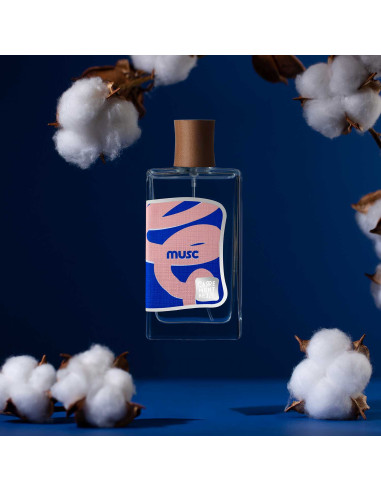
Fresh and fruity top, floral heart, soft musky base. The most directly musky of our fragrances.
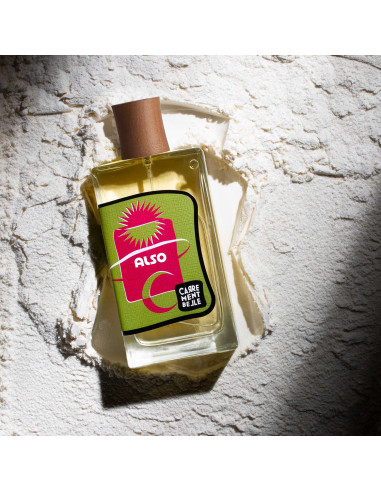
Citrus top, floral and spicy heart, amber and sensual base. An invitation to an inner journey.
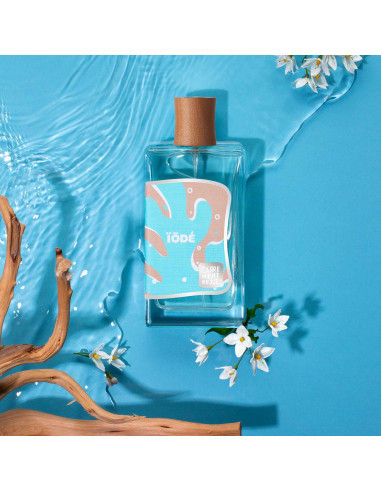
Marine top, chypre and floral heart, woody and amber base. Here the amber plays a soothing part.
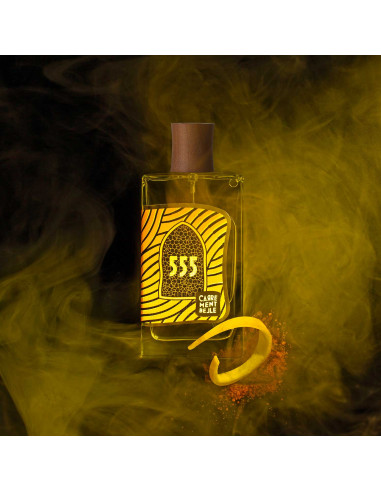
Sparkling and spicy top, incense heart, powdery and sensual base. The closest to the old orientals.
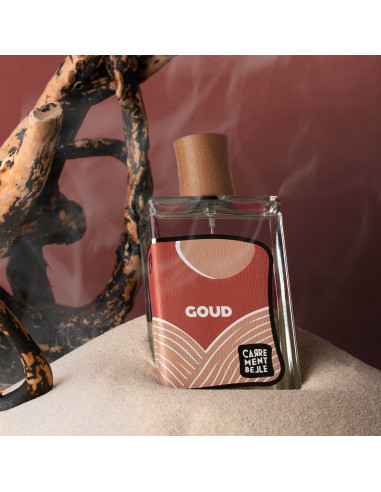
Woody and luminous top, captivating oud heart, soft fruity base. Here the animality comes from the wood.
An animalic perfume suits a woman as well as a man: the facet itself has no gender, it is the composition around it that gives that impression. If you are hesitating, the three perfume extracts above are the ones where the base, and therefore the animality, comes through most clearly.
Your questions about animalic notes
Which animal is linked to the most powerful ingredient in perfumery?
The musk deer. Four other species supplied the great animalic materials: the sperm whale for ambergris, the African civet, the beaver for castoreum and the rock hyrax for hyraceum. In every case the secretion served to mark a territory or attract a mate.
Do animal notes smell bad?
Neat, yes, frankly so. Diluted to a fraction of a percent inside a composition they turn warm, powdery and velvety. That reversal is what built their reputation in perfumery: they only smell good at very low dose.
Where does ambergris come from?
From the sperm whale. It is an intestinal concretion formed around squid beaks, which the animal expels at sea. It can drift for years before washing ashore, and it is salt, water and sun that give it its marine, animalic smell. It is the only animal material the animal gives up by itself.
Is civet still used in perfumery?
Hardly ever. Its harvest was never formally banned, but it requires scraping a gland on a living animal, which was enough to push it out of formulas. Houses use synthetic civetone instead, which reproduces the odorous molecule without the animal.
How do you recognise a perfume with animalic notes?
Wait an hour. Because animalic notes sit in the base, they do not show on the spray. You will recognise them by an impression of warm skin, fur or leather that rises as the top notes fade, and by a trail that stays very present on clothes.
Do Carrément Belle perfumes contain animal materials?
None at all. We work only with plant materials and synthetic molecules, and we do not test our perfumes on animals. The musky and amber facets of musc, also, ïōdé, 555 and goud are all obtained through synthesis.
What is the difference between ambergris and the amber of amber perfumes?
They are three different things. Ambergris is of animal origin and comes from the sperm whale. Amber, the yellow stone, is a fossil conifer resin and is not used in perfumery. The amber accord, the one behind so called amber perfumes, is a perfumer's construction based on labdanum, vanilla and balsams.
- An animal note is not an olfactory family but a base facet that brings warmth, depth and staying power.
- Five materials, five animals: musk and the musk deer, ambergris and the sperm whale, civet, castoreum and the beaver, hyraceum and the rock hyrax.
- All of them are now replaced by synthetic musks and reconstitutions, under CITES and changing expectations.
- These notes are dosed in traces: neat they are repellent, heavily diluted they suggest skin.
- At Carrément Belle, no material of animal origin and no animal testing: the musky and amber facets come from synthesis and from plants.

The Discovery Set brings together our eaux de parfum in sample format, so you can take the time to find the fragrance that suits you. Your first set is refunded as a voucher on your next order.
The Discovery Set


2 Comments